Deskilled figuration: a slow and seemingly inevitable decline towards a world devoid of beauty, where everyone can paint but really no one can”
Ian Goldsmith, 2024
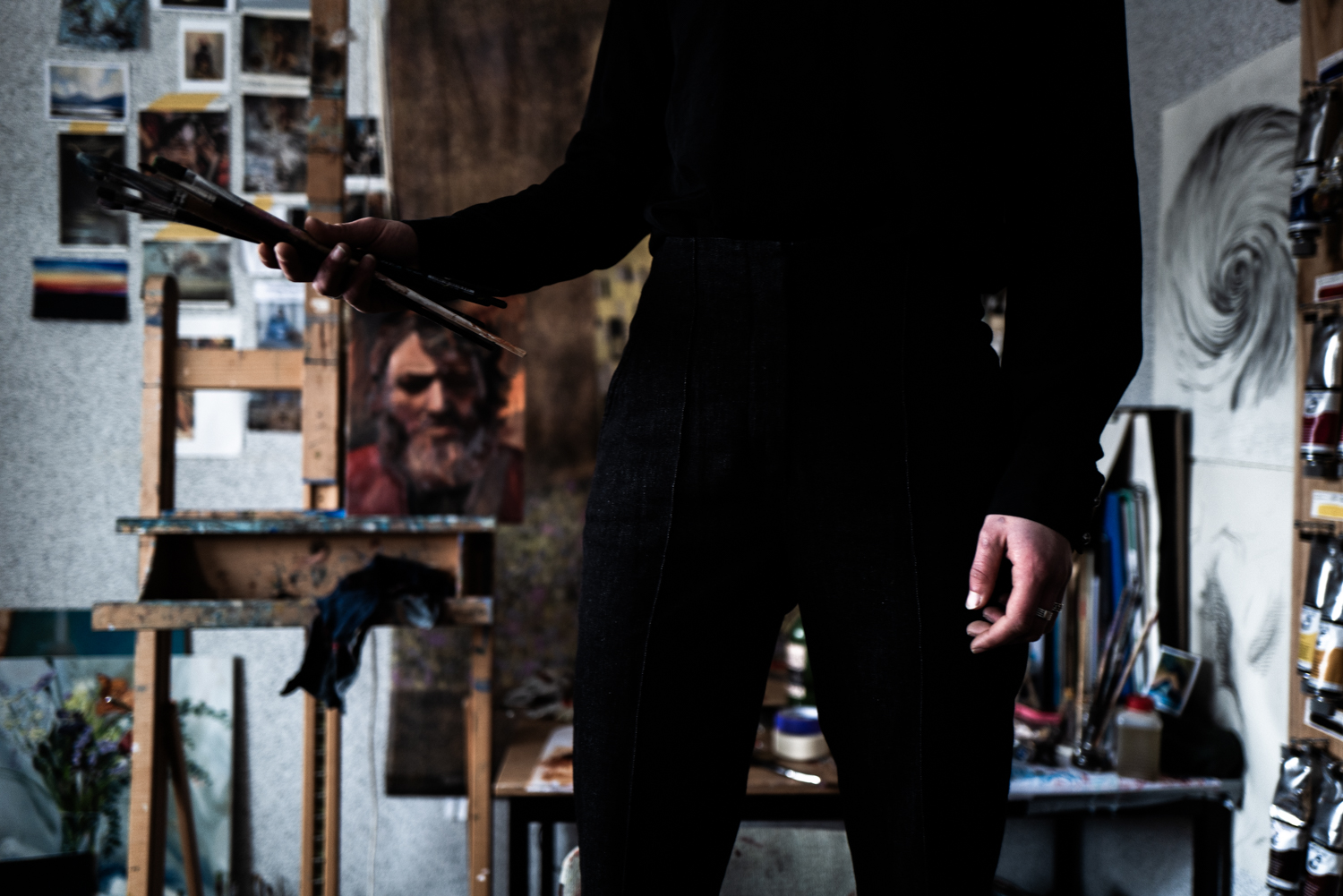
Technical knowledge, like colour theory, anatomy and how to build up a painting are no longer taught at regular art academies because it is believed to disturb the creative process.
About a hundred years ago readymade paints became widely available making it unnecessary to research materials and pigments, resulting in a decline of technical quality. Nowadays students are interested in technical skills, but the teachers who can teach them are becoming scarce to non-existent.
Minerva is the last art academy in the Netherlands with a painting laboratory: a place to make your own paint and learn about pigments. Sadly, the workshops (paintmaking, woodworking, lithography, metalworking etc.) which hold a crazy amount of technical knowledge are hardly integrated into the program. Luckily you can go there yourself; it’s where I learned to work with metal and make my own oil paint.
I spend all my free hours in the workshops and my interest in technical skills made teachers and fellow students question my creativity; why wasn’t I trying new, crazy things? Because we are all on the shoulders of those before us. I don’t have to invent the wheel. I can use the knowledge of people before me to create durable, contemporary and renewing art.
My point of view is that technical skills are necessary to create good work, whether you want to paint figuratively or abstract. One needs to master a tradition to have the right to rebel against it (Chaim Potok, my name is Asjer Lev, 1972).
In a world which is all about efficiency we need to take a step back and look at what we are doing and which materials we are using. Are they durable? In what order do I apply paint or other materials? Do they affect the environment, and in what way? How can I make both my work and my way of working as durable as possible?
Because with a lost connection to the materials you work with, you lose a deeper connection with your artwork.
The dazzling phthalocyanine blue, the bluish ivory black, the brilliant quinacridone rose; I love them only more by understanding.
On AI. AI is trained on everything that is our past: history, science, written text. People with no skill can sell AI generated work, not only generated by an AI that is trained upon the unpaid work of artists, writers and musicians, but also actively taking away income from a group for whom it is already hard to make enough money to make it through the month.
When I was in the process of making sketches for Lucretia I gave AI a promt for a ‘classical looking painting with clair obscur of a woman killing a man‘, just out of curiosity, not to use it. I was just curious if it would come up with something better as I did. AI told me: ‘this is against our guidelines regarding violence.’
Then I gave AI the same prompt, but of a man killing a woman. It gave me at least ten different images and asked me if I wanted more.
This showed me all I need to know. AI does not only lack humanity, but it actively undermines it and promotes gender-based violence, sexism and racism. We need real people, making art, shifting our expectations of the world.
AI has no own imagination, no lived reality (except for a sexist, racist past).
We need art and people to change the future. To imagine a world in which things are better, not worse. A world in which we are more connected, on a smaller scale. The people we can take care for. Our neighbour. Our friends. The people we meet. Share, talk, connect, speak out, speak up.